From the curb, most exterior cleaning looks alike: a van, a crew, a lot of water. The differences show up later. Streaks come back on the glass, the driveway shows stripes, stucco loses some of its finish, or a gutter that looked clear overflows in the first storm. In San Diego County, with salt air near the coast and a short rainy season, those differences cost real money.
This is the blog of RadPad Home Service Pros, so RadPad's own process shows up below as the worked example. The questions work for any company you're comparing, and a good one should be able to answer all of them without hesitating.
Start with insurance, then ask how damage is handled
Exterior cleaning puts people at your roofline, around your glass, and sometimes on your roof. Before you compare methods or prices, ask what insurance the company carries. The Federal Trade Commission's advice for home improvement jobs puts it plainly: ask the contractor for proof of insurance. That guidance was written for remodels and repairs, but the reasoning carries straight over to a crew working two stories up on your house.
Is RadPad licensed and insured? The answer on its FAQ page: "We sure are. We have the required licenses and insurances to provide the services we do."
Then ask the follow-up most people skip: what happens when something is wrong? There are two cases. The first is a problem the crew finds, like a loose gutter fastener or a separated seam that was there before anyone arrived. A careful company photographs it and tells you, which is what RadPad does. The second is something going wrong during the job itself. Ask how that gets reported to you and how it's resolved. A company that has thought about it will give you a straight answer. A vague answer is an answer too.
Ask how they clean each surface
The clearest sign a company knows what it's doing is that its method changes with the surface. A crew that runs one pressure setting over stucco, concrete, and solar panels will damage something eventually. Here's what to listen for:
| Surface | What to expect | What to question |
|---|---|---|
| Stucco, siding, painted trim | Low-pressure soft washing | High pressure on the walls |
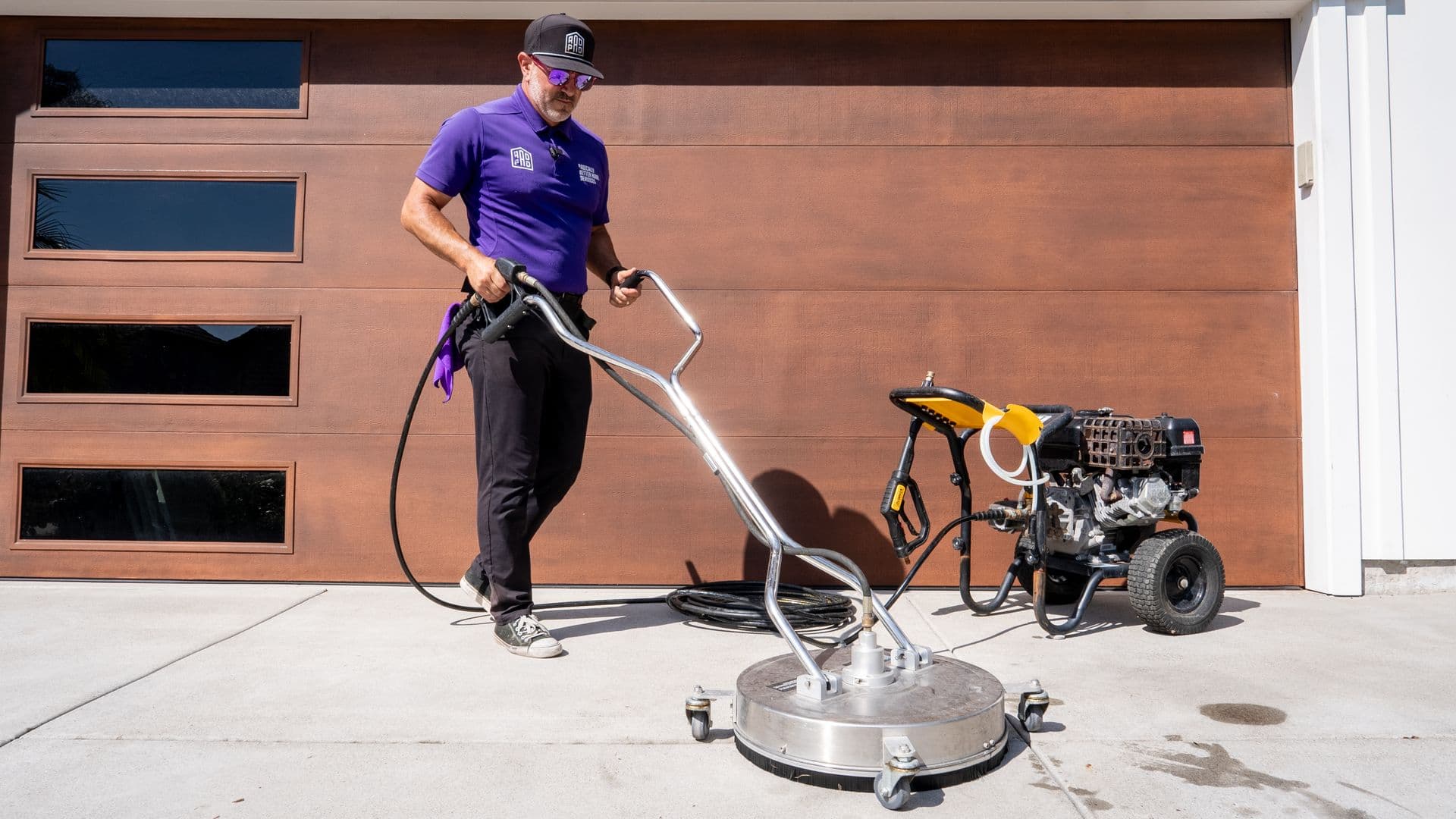
| Driveways, walkways, patios | A rotary surface cleaner | A handheld wand and the stripes it leaves |
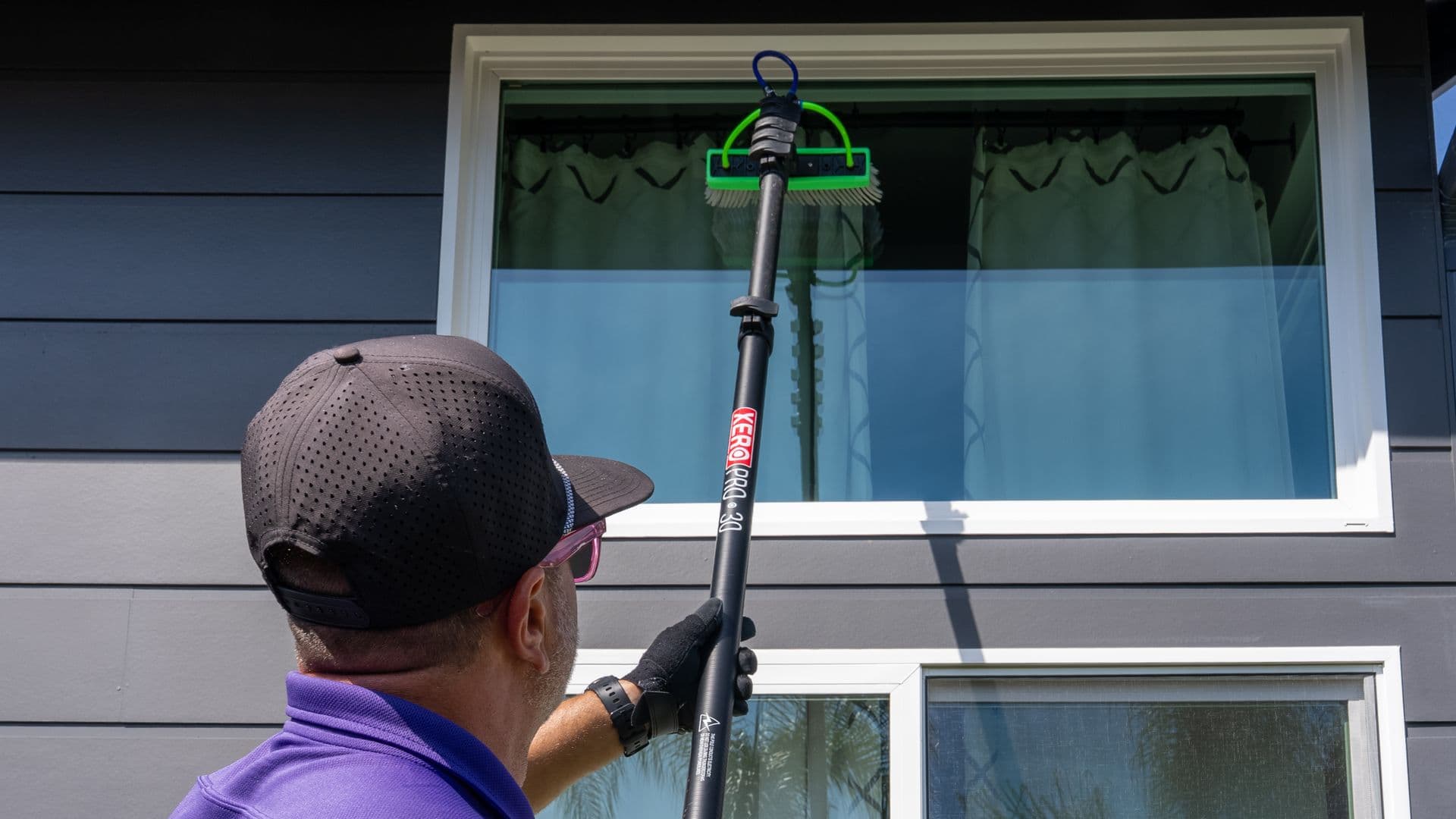
| Windows | Purified water, extension poles for upper floors | Tap water left to dry on the glass |
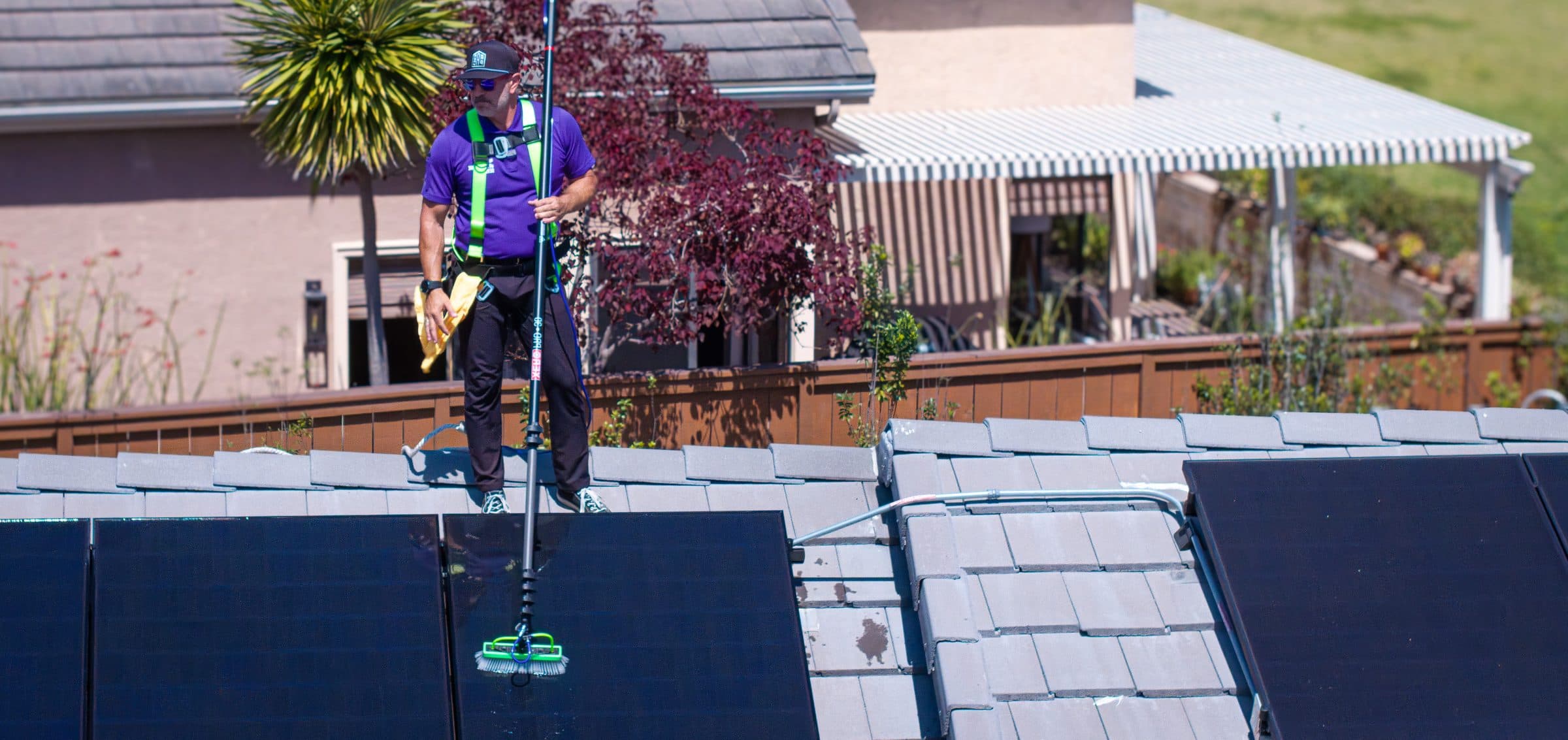
| Solar panels | Deionized water and soft tooling | Pressure washers, detergents, abrasives |
| Gutters | Downspouts flushed and flow-checked, debris hauled away | A scooped trough and nothing else |
That table is also how RadPad works. Stucco, siding, and painted trim get low-pressure soft washing, because too much pressure can damage painted and textured surfaces, and concrete gets a rotary cleaner. Solar panels get deionized water and soft tooling, with no detergents or abrasives, which keeps the cleaning within what panel makers allow. Pressure washing a panel array is what puts a warranty at risk, so if a company tells you it pressure washes solar panels, keep looking.
Reach matters as much as technique. RadPad cleans upper-story glass with extension poles and purified water rather than ladders propped against the building. That's easier on your walls and gutters, and safer for the crew: among workers, approximately 20% of fall injuries involve ladders, according to the CDC. For why purified water matters on San Diego glass, see what to look for in a window cleaner.
What a properly run job looks like
Any company worth hiring can walk you through what happens between your first call and the crew driving away. RadPad's version is a fair standard to hold anyone to:
- A clear scope and a straight number before work starts. Not a range you have to decode.
- A real arrival window and a confirmation. The crew arrives in uniform, in a marked van, so you know who's on your property.
- The same written checklist on every job. One window or the whole exterior, the steps don't change.
- A walk-through of the finished work before the crew leaves. If something isn't right, it gets handled that day.
Of the four, the walk-through is the one to ask about by name. Missed spots on exterior work often don't show until the sun hits at a different angle, and by then the crew is gone. Walking the job together while everyone is still there is how they get caught.
Gutters are where shortcuts cost the most
Scooping out the trough is the visible part of a gutter cleaning. The part that prevents damage is flushing each downspout and confirming the water actually flows, because a clean gutter feeding a blocked downspout still overflows.
Timing matters here. The San Diego coast averages roughly 10 inches of rain a year, with much of the region's precipitation falling between December and March, according to the San Diego County Water Authority. So a gutter that's been filling since spring meets the first real storm all at once. Water damage and freezing accounted for 22.6% of homeowners insurance losses in 2023, per the Insurance Information Institute, and an overflowing gutter sends water down the fascia and siding toward the foundation.
It isn't only about water. CAL FIRE warns that gutters without a cover can collect debris that is "highly susceptible to embers and fire," and its advice is to clean gutters regularly. For more on timing, see when to clean your gutters in San Diego.
Red flags worth walking away from
- One pressure setting for everything. High pressure on stucco, siding, painted trim, or solar panels.
- A ladder leaned against the gutter itself. That's how brackets get bent and fasteners pulled loose.
- A vague quote. A wide range, or a number with no clear scope behind it.
- No walk-through. You find the missed spots after the van has left.
- Hesitation about insurance. A company that's covered can answer in one sentence.
- Pressure to book on the spot. The same FTC guidance lists pressure for an immediate decision among the signs of a home improvement scam.
Questions to ask before you book
- What insurance do you carry, and can I see proof?
- How will you clean each surface on my house: walls, concrete, glass, and panels?
- How do you reach second-story windows and long gutter runs?
- Will I get a clear scope and a straight number before work starts, or a range?
- Do you flush the downspouts and confirm they flow?
- Where does the debris go?
- Will you walk the finished work with me before you leave?
- If you find damage, or something goes wrong during the job, how will I hear about it?
- How often does my property actually need this?
On that last one, most of RadPad's services are commonly scheduled once or twice a year, depending on the service and the property, and many experts recommend cleaning gutters at least twice per year, according to This Old House. A company that bases its recommendation on your property, rather than on the plan it would most like to sell, is telling you something useful. For typical intervals surface by surface, see our guide to exterior maintenance in coastal San Diego.
RadPad in San Diego County
RadPad is locally owned and came out of income-property management, where a missed detail costs somebody money. It covers six categories of exterior care: window cleaning and glass care, solar panel cleaning and protection, gutter cleaning and maintenance, turf cleaning and disinfection, surface cleaning and sealing (including soft washing), and permanent and holiday lighting, split into 18 specialized services. It holds a 5.0 rating across 86 Google reviews, built over 4+ years serving San Diego County.
RadPad works in Oceanside, Carlsbad, San Elijo Hills, Encinitas, Solana Beach, Del Mar, Rancho Santa Fe, Del Sur, and La Jolla, plus San Clemente and Dana Point in south Orange County. Find your area, then put every question above to RadPad directly. Request a quote and you'll get a clear scope and a straight number before any work starts.
Written by
RadPad Home Service Pros
Locally owned exterior care across San Diego County and south Orange County: windows, solar, gutters, turf, surfaces and lighting, on one standard.
About RadPad