If you live within a mile or two of the San Diego coast, you have probably noticed your windows look dull again within weeks of a cleaning, long before an inland house in the same county would. That is not your imagination and it is not a bad cleaning. It is salt air, and it changes the math on how often coastal glass actually needs attention.
Why salt air works differently than dust
Inland, window grime is mostly dust, pollen, and irrigation overspray settling slowly over weeks. Near the water, onshore wind carries fine salt spray off the surf and marine layer, and it lands on glass continuously, not just on days with visible fog or wind. It does not take a storm or a dramatic gust. It is a steady, quiet accumulation that is easy to miss day to day and obvious the moment you compare a coastal pane to an inland one.
The result is a thin film that cuts the clarity of the glass before it looks obviously dirty. Large panes and ocean-facing glass, the kind a lot of coastal San Diego homes are built around, show it first because there is simply more surface for the salt to land on.
What a cleaning needs to actually handle
A cleaning that only wipes the glass misses two of the three places salt and hard-water residue actually collect:
- The glass itself, where salt film and mineral spotting both show up, and where plain tap water can leave behind the same kind of residue it is supposed to remove.
- Tracks and sills, where salt and grit settle and stay, gritty long after the glass looks clean.
- Screens, which catch airborne salt the same way they catch dust, and which a quick glass-only wipe skips entirely.
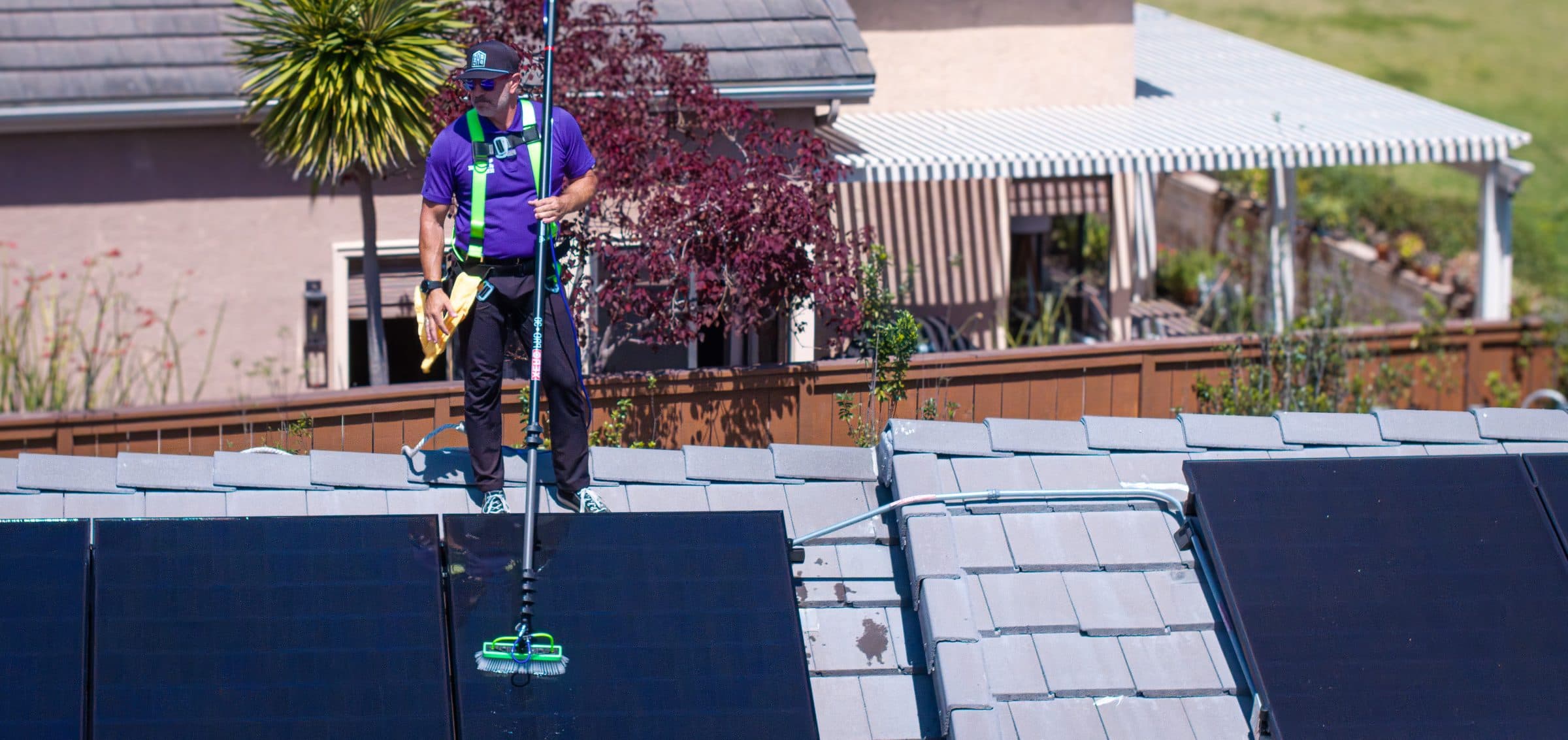
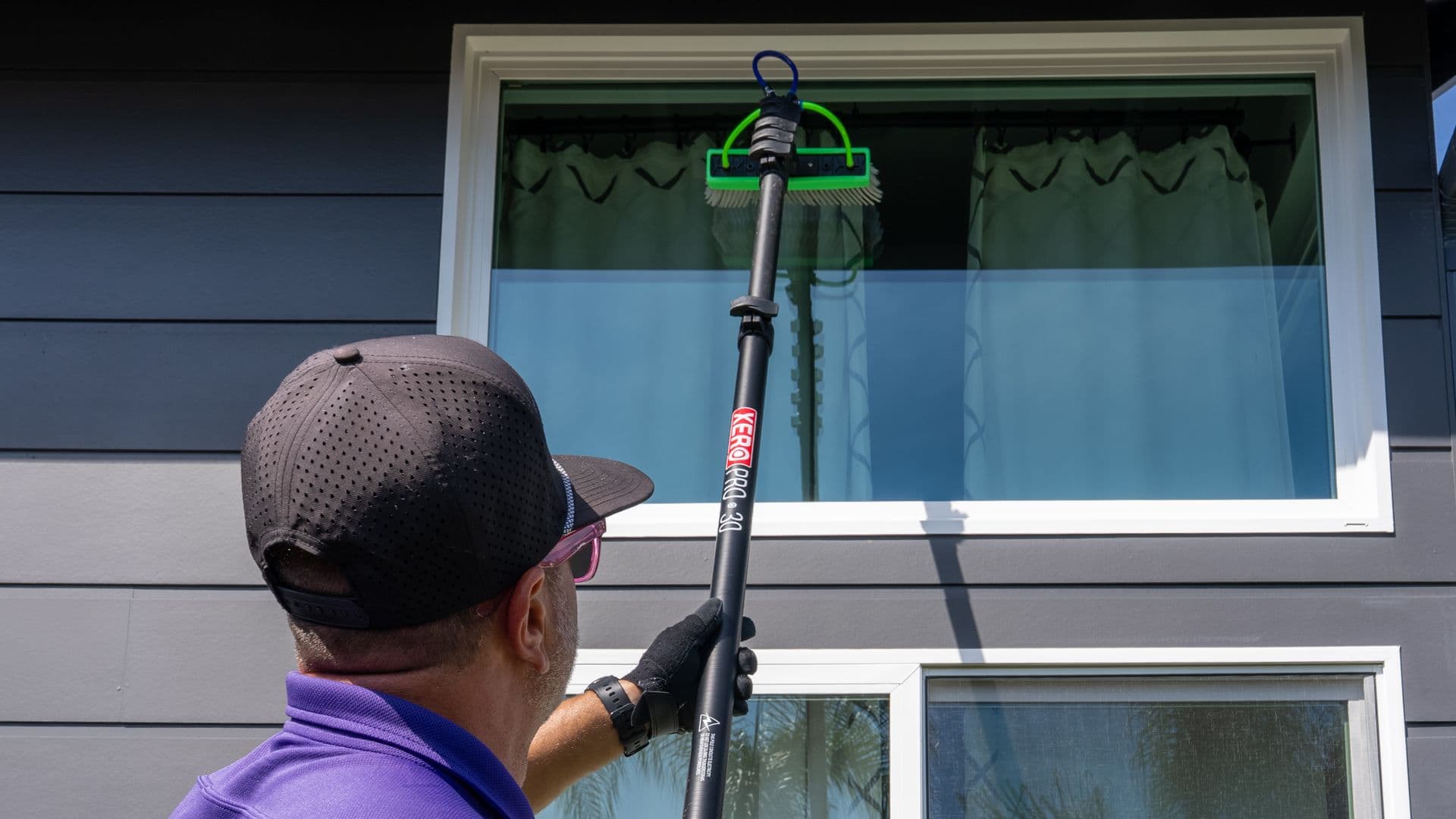
RadPad's residential window visits use purified water on the exterior pass specifically so nothing dissolved in the water dries on the glass and adds its own spotting on top of the salt, and tracks, sills, and screens are part of every visit rather than a separate add-on. Upper-story and hard-to-reach coastal glass, which is common on bluff and headland properties, is cleaned from extension-pole systems rather than a ladder leaned against the house, which is both safer and keeps a ladder off stucco and gutters that salt air has already been working on.
How often, and why the answer changes near the water
Most San Diego County homes do well on a twice-a-year window cleaning schedule. That baseline assumes dust and pollen building up steadily with little rain to rinse it off, which is true for most of the county most of the year.
Closer to the coast, salt changes that math. Homes within a mile or two of the water often look better on a quarterly schedule instead, because the film that would take an inland house six months to build up shows on coastal glass in closer to three. There is no single number that is right for every coastal address. The honest version of this answer depends on how exposed a given property actually is, which is also why RadPad looks at the property before recommending a schedule rather than selling the same interval to everyone.
Between visits: what actually helps
A few habits slow the buildup, though none of them replace a cleaning once the film sets in:
- Rinsing exterior glass with a hose after a windy or foggy stretch keeps loose salt from drying onto the surface, where it is harder to lift later.
- Keeping sprinklers and irrigation heads from spraying directly onto windows removes one of the two sources of the spotting problem, since hard water deposits and salt film often show up together.
- Closing windows during an onshore blow on an unusually hazy or salty-smelling day cuts down what actually reaches the glass, for whatever that is worth on a given afternoon.
None of this changes the fundamental rhythm. It just stretches the gap a little between professional visits.
How exposure varies along the coast
Salt exposure is not uniform even among nearby coastal communities, and the same schedule does not fit every address:
- In Oceanside, salt carries a long way inland and films glass within weeks for properties close to the water.
- Solana Beach and Del Mar sit on exposed bluffs with constant salt-laden air and no real shelter, which is the hardest version of this problem on our route.
- La Jolla combines heavy salt exposure with some of the largest, most architecturally prominent glass we clean, which shows film faster simply because there is more of it to show on.
- Carlsbad and Encinitas split between coastal blocks dealing with salt directly and inland streets where dust and irrigation overspray matter more.
- In San Clemente and Dana Point, exposure can change street to street. A harbor-side or headland home takes salt air constantly, while a house set back behind a ridge a few streets over gets a fraction of it.
If you are not sure which category your address falls into, that is a reasonable thing to ask about rather than guess, since the right interval for the house next door is not always the right one for yours.
Booking it with the rest of the exterior
Salt air does not stop at the windows. The same marine film that dulls glass also settles on solar panels and metal fixtures, so a window visit is often worth pairing with a solar cleaning or a broader exterior pass rather than booking each on its own schedule. For a fuller look at how the coast affects every surface, not just glass, see the guide to exterior home maintenance in coastal San Diego.
RadPad cleans windows for homes across San Diego County and south Orange County's coastal and inland communities alike, with the schedule set by what the property actually faces, not a one-size interval. See Residential Window Cleaning for the full scope, or request a quote and we will tell you what we see at your address.
Written by
RadPad Home Service Pros
Locally owned exterior care across San Diego County and south Orange County: windows, solar, gutters, turf, surfaces and lighting, on one standard.
About RadPad